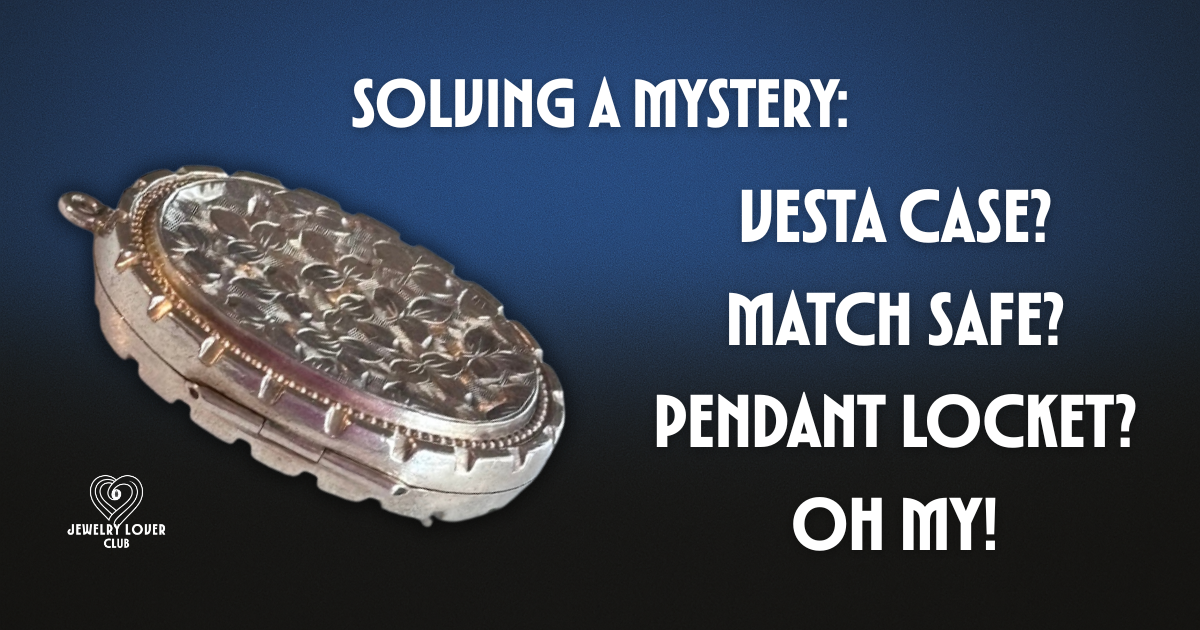
What even is a Vesta Case?
– Me when I started listing this piece.
This is my journey to solve a mystery: Vesta Case, Match Safe, or Pendant Locket? At first, I assumed it is a locket that is missing the bail (a secondary loop that would allow this to be put on a chain and lay flat against a person). Knowing this piece was sterling silver was the easy part of researching this piece before listing it. I was lucky to have a somewhat readable set of hallmarks (symbols denoting information stamped into the silver).
Please note that this post contains affiliate links which means that I may get a commission if you decide to make a purchase though those links at no cost to you.
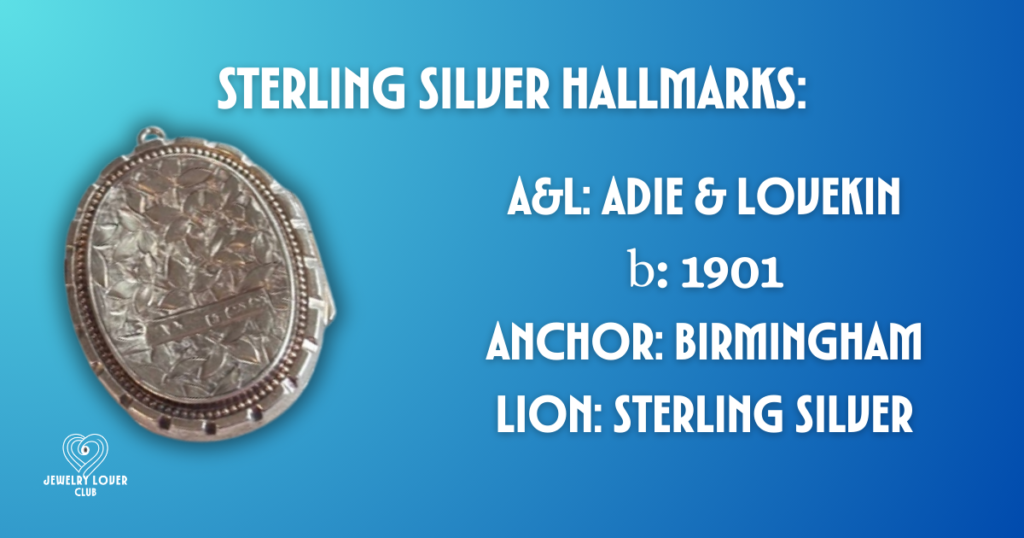
Reading Sterling Silver Hallmarks
It took a bit of research, but the Internet is a wonderful place for those of us who are addicted to learning. Let’s start with the easiest part: The Lion Passant. Seeing the lion at the far right as part of the marks tells me immediately that this is a British piece and that it is Sterling Silver.
Next is an anchor. It is sideways, but it still means that it was made in Birmingham. The fact that it is not right side up gives me pause as that would typically mean that it is from the mid-1800s. If you take the size of the piece into account though, the anchor is often put at this angle to save space and doesn’t always denote age.
The confusion sets in because the date mark is in a lower case letter b which would put it either at 1876 or 1901. If I combine that with the sideways anchor, it would mean the year this was created was 1876. Except there was no duty mark. Duty marks were used until 1890 and without it, I begin to have doubts that I’m reading the marks correctly. Then I move on to the maker’s mark: A& …. something?
Who Are The Silversmiths?
There is no exaggeration when I share that I spent the next two hours or so looking at all the different Birmingham Silversmiths that used an A and & and another letter to denote who they were during that time period. Since the second letter was very difficult to read, I was left with trying to look at font styles. I keep bringing the piece and and my favorite loupe back to my eye in an effort to determine any other clues and then I see it. When I held it at an angle, I could make out the L. The font most closely matches with Adie & Lovekin, two silversmiths who began their business in 1863 by the names of James Adie and Alfred Lovekin. After researching, I was able to discover that they continued to use the sideways anchor after 1891, so I made the decision to go with the date mark of 1901.
Adie & Lovekin 1901 Birmingham Sterling Silver
The True Mystery: Vesta Case, Match Safe, or Pendant Locket?
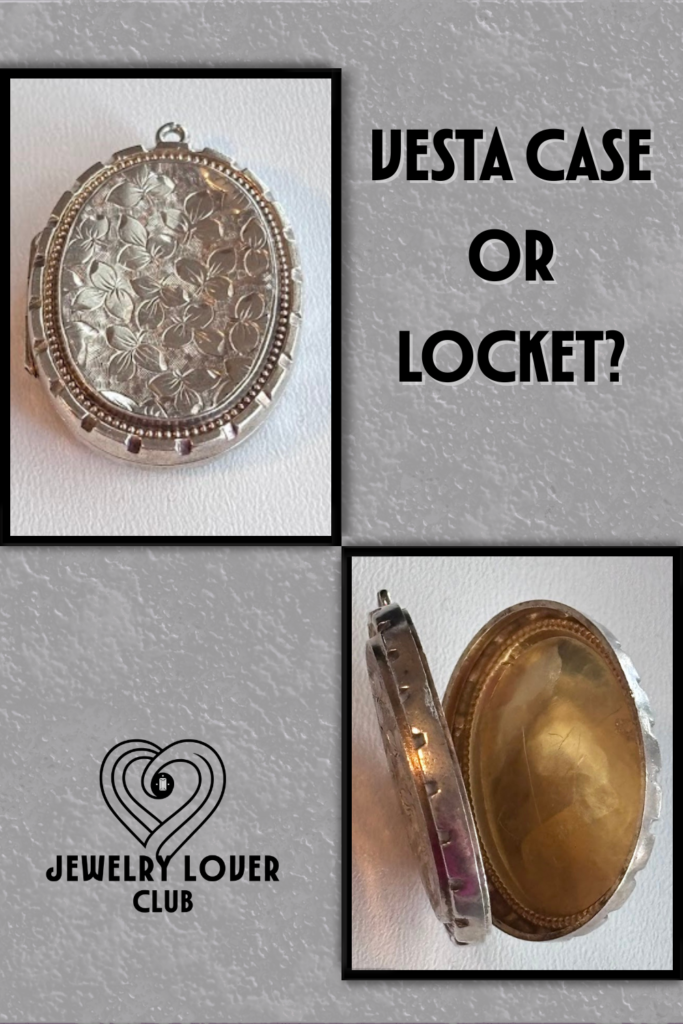
My initial assumption that this piece was a pendant. After identifying the marks, I was left with a huge question: ‘Where is the bail?’. It is in pretty good shape, so it didn’t make sense to me that the bail would be missing. So my brain moves back into Research Mode and I come across the possibility: match safe or the British version: Vesta Case.
Mentally, I moved away from locket due to the depth of the box which is approximately 1/4 inch deep. It is also lined with gold vermeil and there are no inner frame type pieces to keep a photo flat. My issue was that most match safes/vesta cases I came across were rectangular or even novelty shaped. I struggled to find an oval with an ivy pattern, though that design helped me confirm that it was from the Edwardian time period.
The Final Clue: The Invisible Striker
The biggest hurdle was that there was no strike plate to use to light matches and there weren’t any signs that one was part of the design. The only flaw was a few scratch marks on the inside of one lid. As I am holding the object formerly referred to as a locket, my thumb absentmindedly is rubbing across the groove marks around the edges. The lightbulb goes off over my head and I realize that these indentations probably allowed for enough friction to light a match.
The lack of a bail means that it can easily be attached to a link from a chatelaine brooch or belt link. It took quite the time investment to solve this mystery, but I listed it with confidence. I still added the word locket to the listing because it would be nothing for a jeweler to add a bail so the person could put all kinds of sentimental pieces inside since it still snaps closed very firmly.
You can see all the photos of my Vesta Case at the listing HERE and if you would like to see different types of these wearable boxes, you can check out these HERE.
Would you have known right away what this piece was called? Do you have any thoughts to add to my findings?
P.S. Are you a jewelry seller who struggles with keeping track of inventory and wouldn’t mind a little help with your social media captions? I offer all of that in my book Shine Brightly which is available for purchase on Amazon.
Leave a Reply